
The first thing we did when we arrived in St George, after setting up at the caravan park, was to visit the Visitor Information Centre to book a tour. This is something we were looking at doing last year that didn’t happen. Until the day before the date, we were the only ones booked, so we really hoped it would go ahead. Fortunately, at the last minute, several people booked in and we had a nice group of twelve.
There are hardly any photos this time, as it wasn’t really the time or place, during the tour.
The tour was the “Cotton Vineyard Farm Tour”. This would have been ideal a bit earlier in the year, while harvest was happening, but it was still really interesting. Picking happens from April to early May. Sadly, the day was wet, so we weren’t able to get out into the cropping paddocks, but they had a good alternative for us.
We were picked up at the caravan park by a small school bus, driven by Harry, who had grown up on his family’s vineyard, but now drives a school bus and does these tours. He took us for a drive around town and along the river, giving us the local history and information.
We were then joined by Craig, who is a second generation cotton farmer, who told us all about it.
Once the irrigation scheme associated with Beardmore Dam was established in the early 1970s, there were ballots for properties. Craig’s parents were one of the pioneering land holders. After clearing the land they were deciding what crop to grow and settled on cotton. The first years were difficult, learning as they went along.
Now, the cotton growing industry is extremely technical, making the most efficient use of water and other inputs. The paddocks are 100 metres long and the land has a one metre fall over that space. Where the water was released from the irrigation channel through water wheels it is now electronically controlled gates. Craig’s son has developed a new system that is all automated.
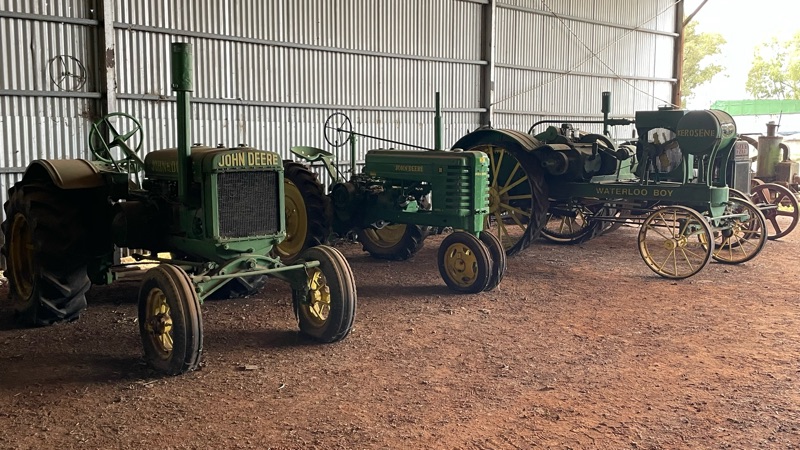
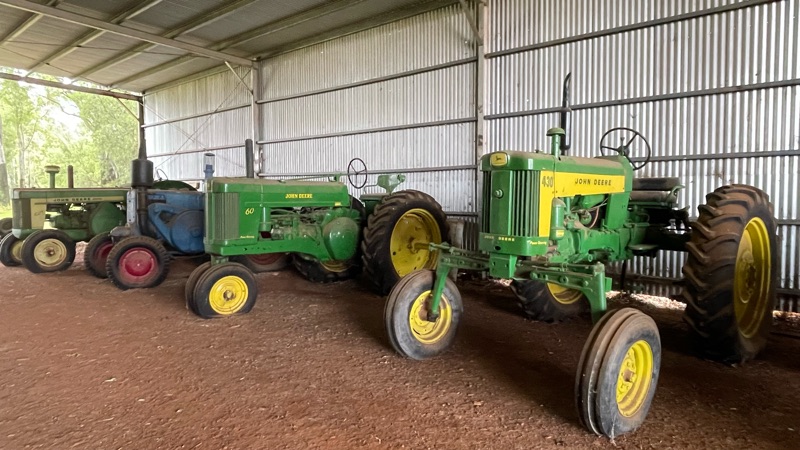
As the weather was wet, we went to a farmer’s shed. It was huge and inside was his collection of vintage tractors and cotton pickers, as well as the modern equivalent.
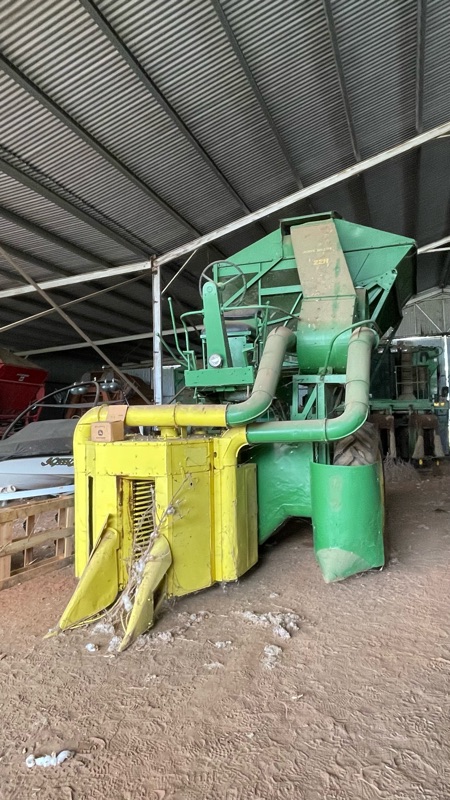
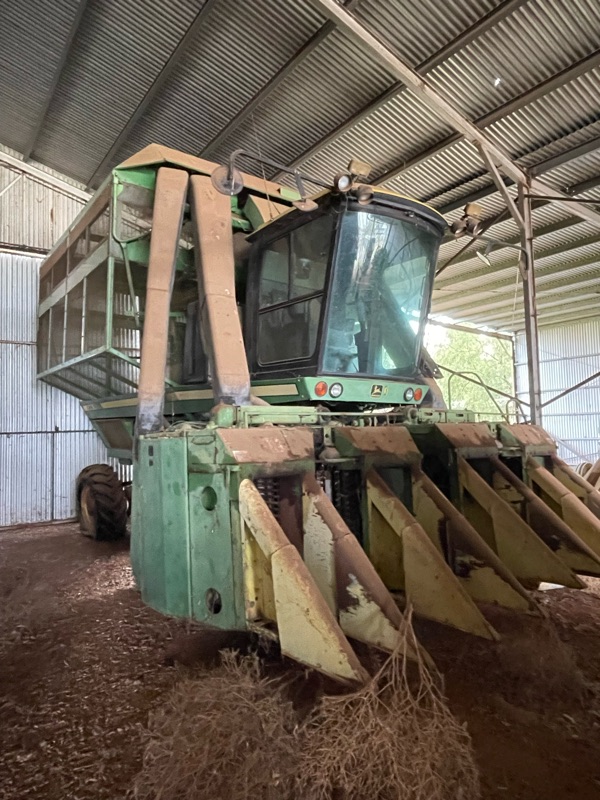
The basic system hasn’t changed since the 1940s, but the current pickers are on steroids and very plush……
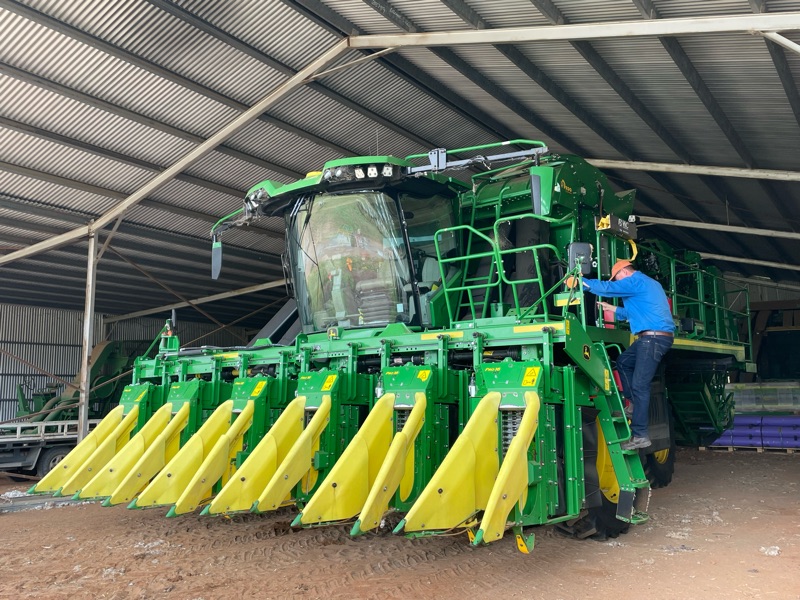
……. and worth about two million dollars. The tractors they use are worth about one million dollars. Big money.
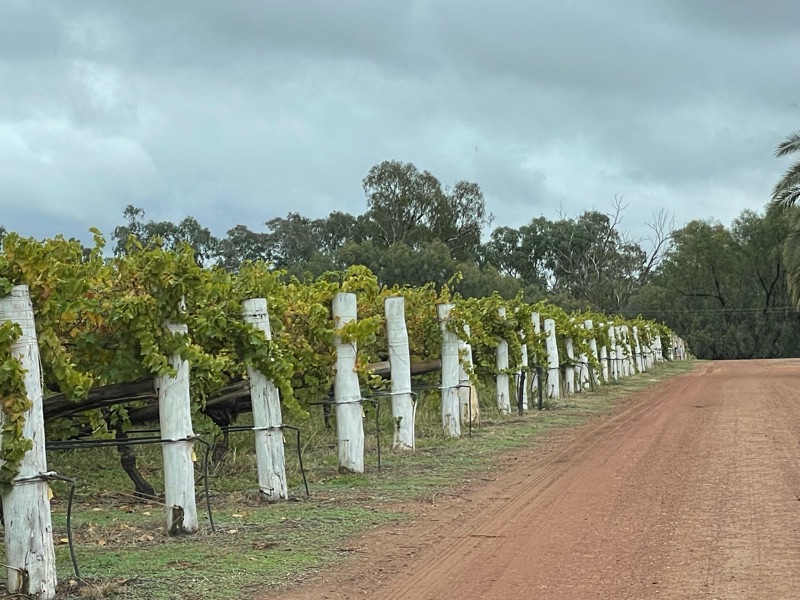
After we had learned all about the cotton growing industry, we were taken to Riversands Vineyard. Here they grow both table and wine grapes. We were greeted with a cup of piping hot, delicious pumpkin soup, which was very welcome. It had stopped raining, so we were able to have a short walk through the vineyard and learn about it all from the owner.
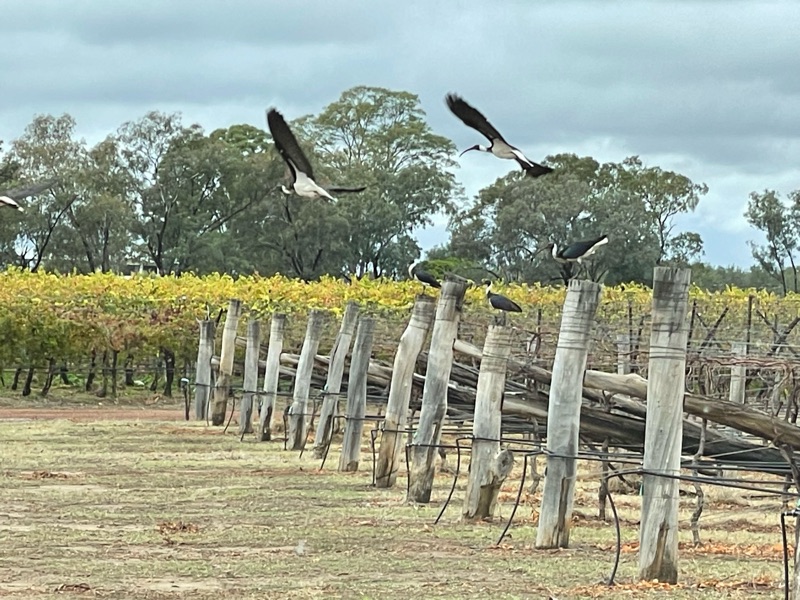
We were amazed at how labour intensive table grape growing is. Much more so than wine grapes. It makes you wonder how they make any money when you see the price we often buy them for in the supermarket.
Once we finished our walk it was time for some wine tasting. There were 13 different wines to taste, followed by sandwiches and slice for lunch. It turns out that the local doctor, back in 1862, was the first to grow grapes in St George. He had a fairly poor success rate initially, but eventually established a small vineyard in what is the centre of town these days.
There was a quiz during the wine tasting and we won a bottle of Red Muscat for answering one of the questions.
Of course, we bought a couple of other bottles of wine as well.
Harry and Craig donate their time to run these tours and all profits go to local community groups. We are so pleased that we went along.
And that was the end of our time in St George. The next day we started to head south again.
More soon.

3 comments:
An interesting day out.
Wow, that machinery is huge!
Sounds like an interesting day out....
Post a Comment